Key Takeaways
-
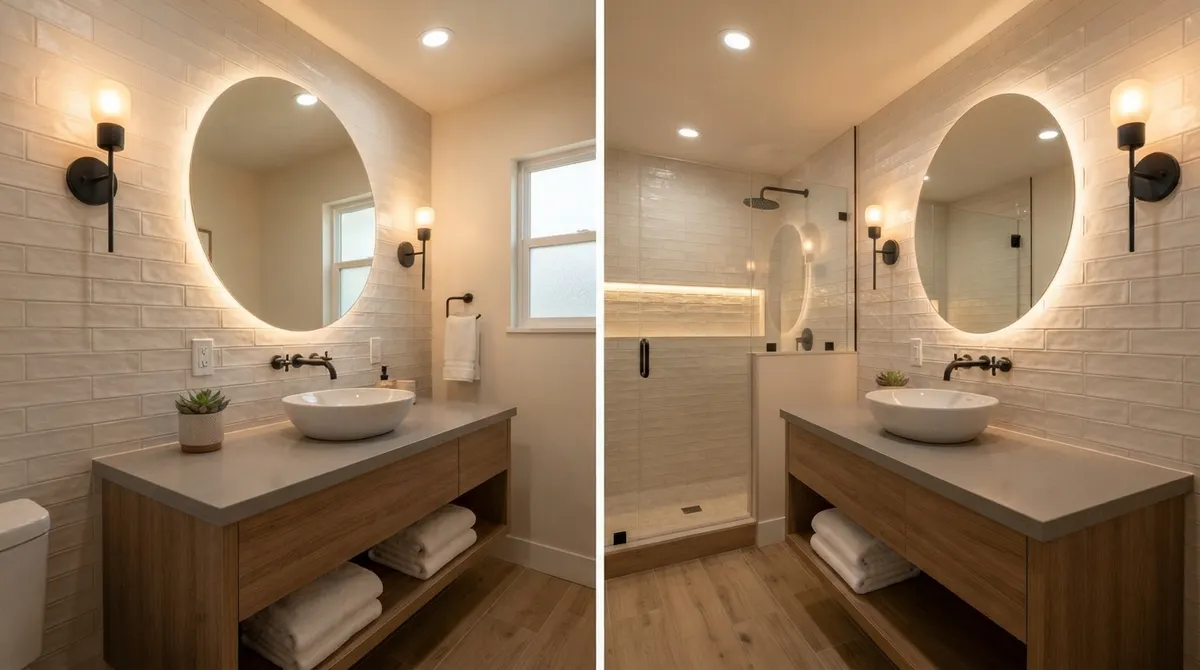
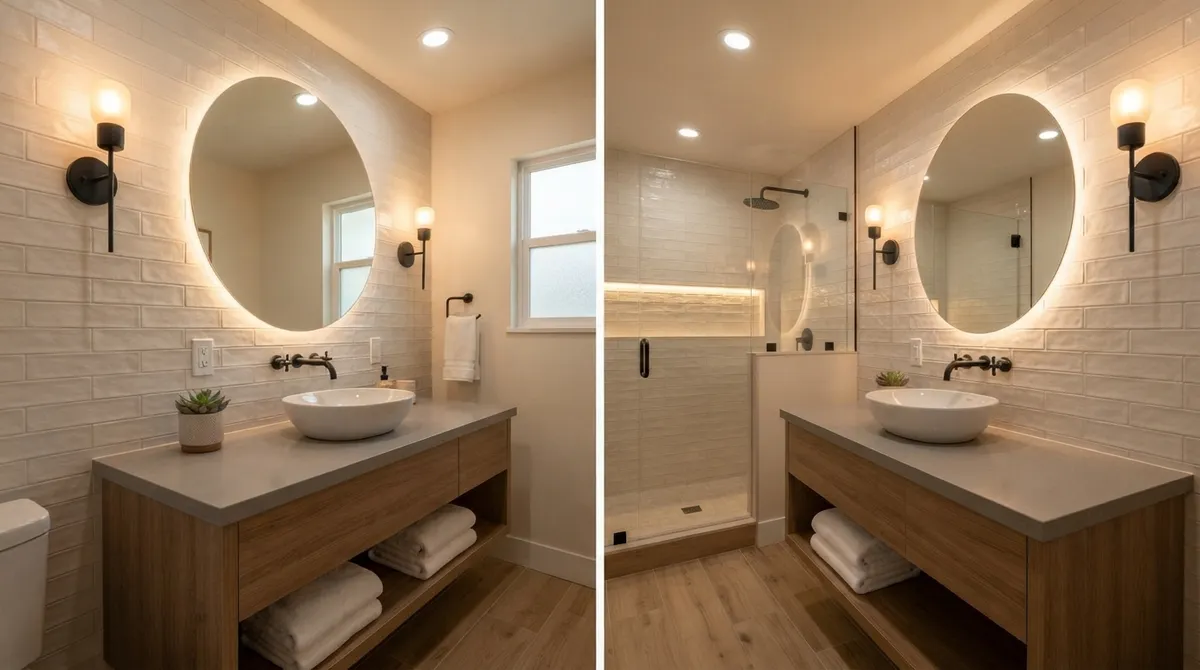
Layer three types of light in a small bathroom: soft ambient light for the whole room, clear task light at the mirror, and an optional accent glow for mood.
-
Place sconces on both sides of the mirror about 60 to 66 inches above the floor to cut shadows on your face; use a vanity light bar or lighted mirror if wall space is tight.
-
Use two or three modest light sources instead of one bright ceiling fixture to reduce shadows and dark corners.
-
Put the vanity light and ambient light on separate switches or dimmers so you can go bright for grooming and soft for relaxing.
-
Choose a CRI of 90 or higher at the vanity and a neutral white around 3500 to 4000 K, keeping bulb color temperature consistent throughout the room.
-
Confirm every fixture, especially near the shower, is rated for its location and plan wiring with a qualified electrician before walls and ceilings are closed up.
Small bathrooms can feel like a puzzle. You have a tub or shower, a vanity, a toilet, and maybe six inches to spare. Then you add a dim ceiling light, and suddenly the whole room feels like a cave. Sound familiar?
Good news: the best lighting for a small bathroom does not need a big budget or a big footprint. It just needs a smart plan. The trick is to layer your light in three parts: soft, even light for the whole room, clear light at the mirror, and an optional glow for mood. Several modest light sources almost always beat one bright fixture in the middle of the ceiling.
Here at iCorry Construction (Florida License CRC1334854), we plan lighting early in every bathroom remodel, because fixture spots, switches, and wiring are much easier to set before the walls are closed up. In this guide, we share 12 ideas you can use in your own bathroom, along with the details that keep your project safe and up to code. Let’s get started!
Start With the Big Picture: Layered Lighting
Before you pick a single fixture, it helps to know the three layers of bathroom light. Think of them as a team where each member has a job.
- Ambient light: General light that fills the room so you can see and move around safely.
- Task light: Focused light at the vanity for shaving, makeup, and skincare.
- Accent light: Low, gentle light that adds warmth and makes the room feel larger.
Houzz’s 2024 U.S. bathroom renovation study shows that homeowners often mix these layers. Recessed lights were chosen by 44% of homeowners updating their bathroom lighting, sconces by 36%, ceiling lights by 32%, and wall lights by 31%. In other words, most people are combining fixture types, not relying on just one.
12 Lighting Ideas That Work in a Small Bathroom
1. Use Sconces on Both Sides of the Mirror
If you have room, this is hard to beat. Light on both sides of the mirror, near face level, helps cancel out shadows under your eyes and chin. A common starting point is to place the center of each sconce about 60 to 66 inches above the floor. Adjust from there based on your height, the mirror size, and the fixture design.
2. Choose a Slim Vanity Bar When Space Is Tight
In a narrow bathroom, side sconces may not fit. A single vanity light bar above the mirror is a practical fix. Pick one that is wide enough to light your whole face, and avoid fixtures that hang low and crowd the mirror.
3. Try a Lighted Mirror
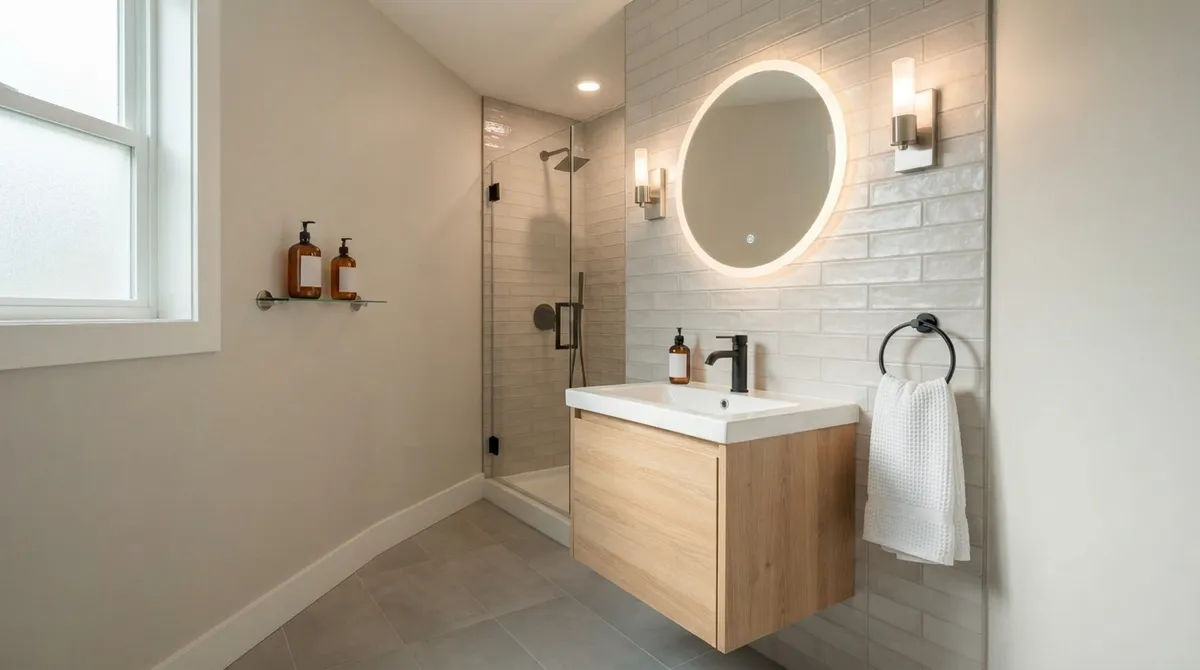
A lighted mirror saves wall space and puts the glow right where you need it. Houzz reports that lighted mirrors showed up in 19% of renovated bathrooms in its 2024 study. They are a smart pick for powder rooms and tiny guest baths.
4. Go With Flush-Mount or Recessed Lights for the Ceiling
Low ceilings and small floor areas do not play well with big, droopy chandeliers. A flush-mount fixture or a few well-placed recessed lights spread soft, even light without eating up headroom. Choose a size that fits the room instead of an oversized decorative piece.
5. Spread Several Modest Sources Around the Room
Rather than one super bright bulb, use two or three gentler sources. This gives you even coverage and fewer dark corners. Even a small bathroom feels bigger when the corners are lit.
6. Add Dimmers or Separate Switches
Here is a simple luxury that pays off every day. Put the vanity light and the ambient light on separate switches or dimmers. You can go bright for morning grooming and soft for a late-night soak. Just make sure your bulbs and fixtures are compatible with the dimmer you choose, or you may get flicker or buzzing.
7. Pick LED Fixtures and Bulbs
LEDs use less energy and last a long time. Houzz found that 55% of bathroom renovators chose LED lightbulbs. One tip: if you buy a fixture with built-in LEDs, check whether the light source can be replaced, what the warranty covers, and how good the color quality is.
8. Look for a High CRI at the Vanity
CRI stands for color rendering index. It tells you how true colors look under a light. For the vanity, a CRI of 90 or higher helps skin tones, makeup, and hair color look more natural. It is a small spec that makes a big difference at the mirror.
9. Get the Color Temperature Right
Color temperature is measured in kelvins (K). A neutral white around 3500 to 4000 K is one commonly suggested range for clear grooming light. Many people prefer warmer light to match the rest of the home, so choose what feels good to you. The important part is to keep the bulbs in the room consistent so they do not clash.
10. Add a Shower Light With the Right Rating
Dark showers can feel cramped. A light made for the shower area helps, and Houzz reported shower lights in 27% of renovated bathrooms. The key is the rating. Fixtures near water must be rated for the location where they are installed, and local electrical code applies. Plan this with a qualified electrician.
11. Use a Fan-and-Light Combo
Small bathrooms need good ventilation, and a fan with a built-in light can handle both jobs in one ceiling spot. Houzz found fixtures with a fan in 24% of renovated bathrooms. This saves ceiling space, which is gold in a tight room. Coordinate its placement with ceiling framing and your vent path before finishes go in.
12. Add a Soft Accent Glow
For the finishing touch, think about under-vanity lighting or a soft strip light at toe level. It makes a floating vanity look dreamy and gives you a gentle night light. Undercabinet lights are less common (5% in the Houzz study), so this idea can make your bathroom feel a little special.
How Much Light Does a Small Bathroom Need?
A handy planning estimate is about 70 to 80 lumens per square foot. So a 5 by 8 foot bathroom (40 square feet) would need around 2,800 to 3,200 lumens total. Treat that as a starting point only. Real needs depend on the room layout, where the fixtures sit, how reflective your surfaces are, and how much task lighting you add. Light-colored walls and glossy tile bounce more light around, so you may need less.
Quick Comparison: Which Fixture Fits Your Layout?
| Fixture Type | Best For | Watch Out For |
|---|---|---|
| Side sconces | Shadow-free grooming light | Needs wall space on both sides of the mirror |
| Vanity light bar | Narrow vanities | Can cast shadows if mounted too low |
| Lighted mirror | Powder rooms and tight walls | Check the power source and dimming options |
| Recessed lights | Even general light, low ceilings | Needs ceiling framing and wiring planned ahead |
| Flush-mount fixture | Simple, budget-friendly ambient light | Choose a size that fits the room |
| Fan with light | Saving ceiling space | Confirm vent path and light output |
Planning Steps for a Remodel
Lighting works best when it is part of the full remodel plan, not an afterthought. Here is how we like to approach it with homeowners.
- Map the room. Note where the vanity, mirror, shower, toilet, and door sit.
- Choose your three layers. Pick ambient, task, and accent lighting that fit the space.
- Set fixture heights and spots. Match them to the mirror, vanity, and ceiling framing.
- Plan switches and dimmers. Decide what runs together and what runs alone.
- Confirm ratings and code needs. Make sure each fixture is rated for its location.
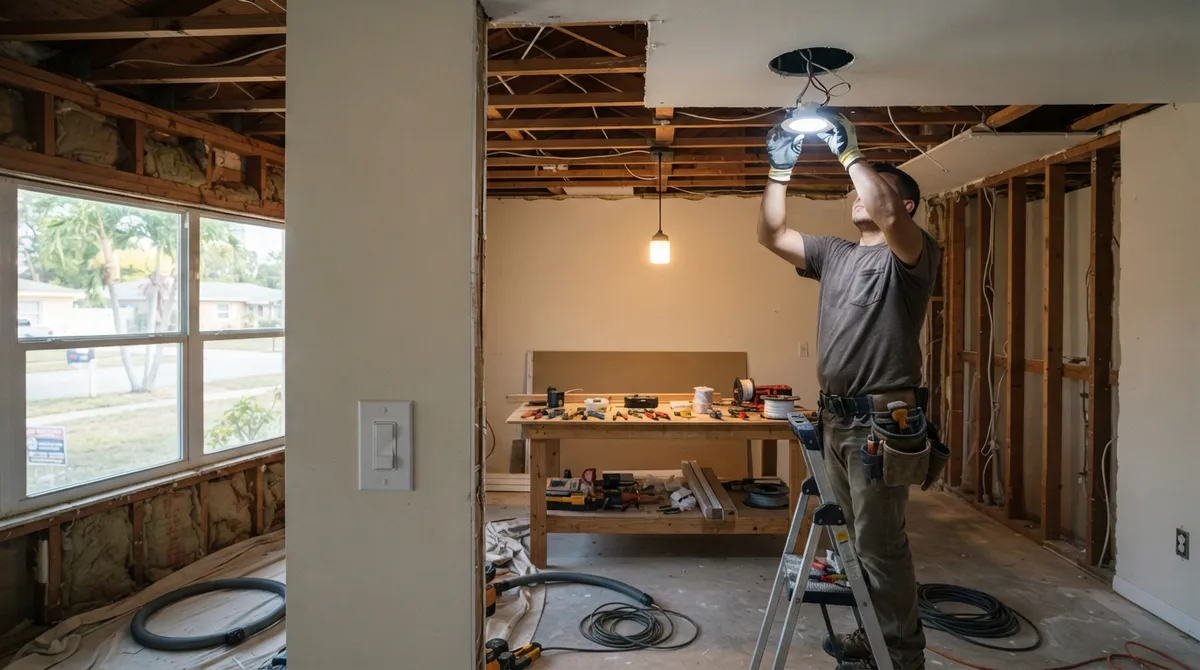
- Coordinate the electrical work. Wiring is done by qualified trades before drywall and finishes go up.
Getting this order right can save you from cutting into a finished wall later. If you are comparing options for a full renovation, our kitchen and bathroom remodeling page explains how we handle fixtures, tile, waterproofing, and layout changes together.
Common Small-Bathroom Lighting Mistakes
- Relying on one ceiling light. It creates shadows on your face and leaves corners dark.
- Mounting vanity lights too high or too low. This casts shadows or causes glare.
- Mixing color temperatures. One cool bulb next to a warm one looks off.
- Skipping dimmers. Bright light at midnight is no fun.
- Ignoring wet and damp ratings. This is a safety and code issue, not just a style choice.
Why Planning Early Matters
Electrical routes, fan ducts, and ceiling framing all affect where lights can go. When we remodel a bathroom, we walk through these details before finishes are installed, so you are not stuck with a light in the wrong spot. This is also where hiring a licensed contractor matters. Unlicensed handymen may skip permits or ignore code, which can lead to safety risks and costly fixes down the road. Our guide on how to hire a home remodeling contractor in Apollo Beach shares what to look for.
If your bathroom is part of a bigger update, such as new tile, a new vanity, or a layout change, our home remodeling and renovations services can bring it all together. When you work with us, you work directly with Stephen Corry, the owner and license holder, who brings more than 20 years of construction experience to every project. You can read more on our about page. We serve homeowners across the Apollo Beach area, and you can visit iCorry Construction on Google to see what neighbors say about working with us. We also invite you to follow iCorry Construction on Facebook for project updates.
Make Your Small Bathroom Feel Bright and Roomy
Lighting alone will not add square footage, but it can make a tight bathroom feel open and calm. Pair your fixtures with a few simple tricks:
- Use light paint colors and glossy or lightly reflective tile.
- Hang a larger mirror to bounce light around.
- Choose a glass shower door or a clear curtain so light flows through.
- Keep the vanity clear so light is not blocked by clutter.
Ready to Brighten Your Bathroom?
The best lighting for a small bathroom comes down to layers, placement, and planning. Start with even ambient light, add clear task light at the mirror, and finish with a soft accent if you like. Add dimmers, choose the right ratings, and set it all up before the walls close.
Want a hand? Stephen and our team would love to talk through your space. Contact us to request a free quote, or call (727) 637-7785. We respond to quote requests within 24 hours.
FAQs
Q: What is the best lighting for a small bathroom?
A: A layered plan works best: soft ambient light for the room, clear task light at the mirror, and an optional accent glow. Several modest sources usually beat one bright ceiling fixture because they give more even light with fewer shadows.
Q: Where should bathroom vanity lights go?
A: If space allows, put lights on both sides of the mirror near face level to cut shadows. A good starting point is about 60 to 66 inches from the floor to the center of each sconce. In a narrow space, a vanity bar above the mirror or a lighted mirror works well.
Q: What color temperature is best for bathroom lighting?
A: A neutral white around 3500 to 4000 K is a popular choice for clear grooming light. Some people like warmer light to match the rest of the home, so go with what feels right to you. Just keep bulbs in the room consistent, and look for a CRI of 90 or higher at the vanity.
Q: Should bathroom lights be on dimmers or separate switches?
A: Yes, if you can. Separate switches or dimmers for the vanity and the ambient light let you go bright for grooming and soft for relaxing. Just check that your bulbs and fixtures work with the dimmer you pick.
Q: Can I put recessed lights over a shower?
A: Sometimes, but only with fixtures rated for the shower area and installed to local electrical code. Because water and wiring are involved, plan this with a qualified electrician before the walls and ceiling are finished.
Our Service Area