Key Takeaways
-
Confirm your parcel's jurisdiction and zoning first: Hillsborough County generally allows one ADU on a lot of at least 7,000 sq ft with an owner-occupied, detached single-family home.
-
Standard ADU living area is capped at 900 sq ft; lots of 14,520+ sq ft may request a variance, but the maximum is 1,200 sq ft or 25% of the main home's living space, whichever is less.
-
Choose the ADU type that fits your goals: detached backyard unit for privacy, garage conversion to use existing space, or attached addition for multigenerational living.
-
Get a written, site-specific estimate from each builder listing allowances, exclusions, and change-order pricing, and verify the Florida license number before signing.
Thinking about adding a small home behind your main house? You are not alone. More Apollo Beach families are looking at accessory dwelling units, often called ADUs, for aging parents, grown kids, guests, or extra income. It is a smart way to gain space without leaving the neighborhood you love.
But finding the right ADU builder in Apollo Beach, FL takes more than a quick search. Rules vary by property. Permits matter. And the contractor you pick will shape your whole experience.
We are iCorry Construction (Florida License CRC1334854), a licensed residential contractor based right here in Apollo Beach. In this guide, we walk you through five things to check before you sign anything. We keep it simple and friendly, so you can plan with confidence.
1. Confirm Your Property Can Have an ADU
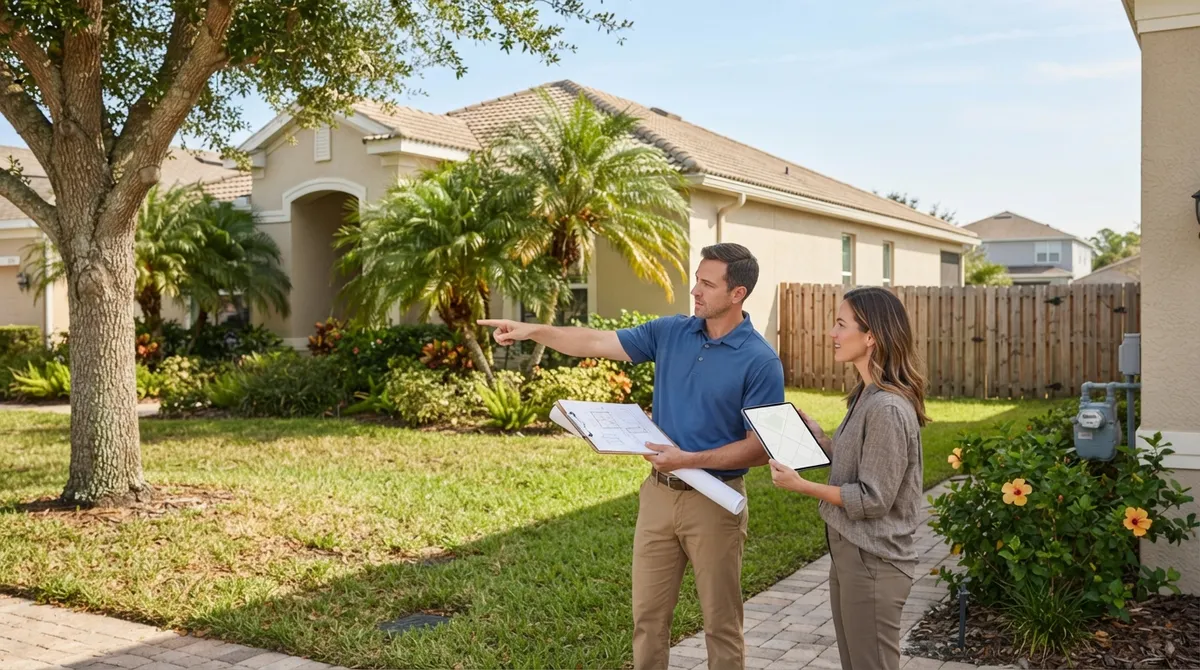
Before you talk to any builder, find out if your lot qualifies. Not every property can have an ADU. This is the single most important first step.
Apollo Beach is an unincorporated community in Hillsborough County. That means county rules generally apply, but you should confirm your parcel’s jurisdiction first. City limits can have different rules.
What the County Code Generally Says
Hillsborough County’s Land Development Code generally allows one accessory dwelling on a qualifying lot with a detached, owner-occupied single-family home. Here are the key points to know:
- The lot should be at least 7,000 square feet, unless a Planned Development says otherwise.
- The standard ADU living area is capped at 900 square feet.
- On lots of at least 14,520 square feet, you may request a variance for a larger unit. It cannot exceed 1,200 square feet or 25% of the main home’s living space, whichever is less.
- ADUs can be attached or detached, but they must meet setbacks and lot-coverage limits.
Codes can change, so always verify current rules with the county for your exact parcel. A good builder will help you walk through this review before any design work begins.
Other Site Factors That Matter
Zoning is only part of the story. Your builder should also look at your survey, drainage, utilities, flood exposure, and fire access. Coastal areas like ours can have site-specific limits, so a parcel-by-parcel check is worth the time.

2. Decide Which Type of ADU Fits Your Goals
There is more than one way to add living space. The right choice depends on your lot, your budget, and how you plan to use the space.
| ADU Type | What It Is | Best For | Things to Consider |
|---|---|---|---|
| Detached backyard unit | A separate small home on your lot | Privacy for guests, family, or renters | Setbacks, utility runs, and lot coverage |
| Garage conversion | Turning an existing garage into living space | Using space you already have | Floor height, structure, and parking needs |
| Attached addition | An apartment-style addition to the main home | Multigenerational living | Tie-in to the existing structure and roofline |
If you are not sure which path fits, that is okay. Stephen Corry, our owner and license holder, can talk through your goals and explain what is realistic for your property. You can also learn more about our home additions, ADUs, and garage conversions.
3. Understand the Permit and Plan Process
Permits are not the fun part, but they protect you. Hillsborough County’s residential construction checklist covers accessory dwelling unit and modular projects. Building and trade permit applications are submitted through the county’s HillsGovHub system.
Here is a simple look at how an ADU project often moves forward:
- Check zoning, setbacks, and lot coverage for your parcel.
- Review your property survey, utilities, drainage, and flood considerations.
- Decide what plans, design documents, or engineering are required.
- Submit permit applications through the county’s system.
- Begin construction once permits are issued.
- Complete inspections and a final walkthrough.
We do not provide in-house design or architectural services. If your project needs plans, Stephen can explain what plans, design documents, or engineering are required and coordinate the construction side from there. No one can guarantee permit approval, so look for a builder who is honest about that.
If you already have a permit problem or an unfinished project, we can help there too. Take a look at our permit and code resolution service.
4. Compare Builders the Smart Way
Choosing an ADU builder in Apollo Beach, FL is a big decision. A little homework now can save you stress later. Here is a simple checklist to use when you compare contractors.
Questions to Ask Every Builder
- Are you licensed in Florida, and can I verify the license number?
- Do you carry the proper insurance?
- Have you built or converted ADUs before?
- Who handles permits, and what do you manage versus what I handle?
- How do you coordinate plumbing, electrical, and utility connections?
- What is included in the quote, and what is excluded?
- How are change orders priced?
- What warranties do you offer on products and workmanship?
Why Licensing Matters
This is a big one. Hiring an unlicensed contractor or handyman can seem cheaper at first. But unpermitted work can lead to code violations, trouble with insurance, and costly fixes later. A licensed contractor pulls proper permits and stands behind the work.
For more help, read our guide on how to hire a home remodeling contractor in Apollo Beach. You can also see how we approach local projects on our page about the best home remodeling contractor near Apollo Beach, FL.
5. Look for Direct Owner Involvement
Here is something many homeowners tell us they wish they had known sooner. On a project like an ADU, who manages the job matters as much as who swings the hammer.
When you work with iCorry Construction, you work directly with Stephen Corry. He started in construction at 14, building two- and three-story custom waterfront homes in the Madeira Beach area. He now has more than 20 years of experience in remodeling, construction, sales, and project management, plus a business degree from the University of South Florida.
That means one person who knows your project from start to finish. You get clear communication and clear expectations on costs and timelines. Learn more about iCorry Construction and how we work.
How We Run an ADU Project
- We talk through your goals, priorities, budget, and timing.
- We define the work, including materials, permits, and any engineering needed.
- Stephen coordinates the approved work, trades, and scheduling, and keeps you updated.
- We walk through the finished project and review product and workmanship warranty information.
If construction uncovers hidden damage or earlier work that needs correcting, Stephen explains what he found, the proposed repair, and how it affects cost or timing before more work moves forward. No surprises hiding in the walls.
What About Cost and Timing?
This is the question everyone asks, and we want to be honest with you. ADU cost and schedule depend on the property, the size, the type of unit, utility connections, and site conditions. Any single number you see online may not match your lot.
The best approach is to get a written, site-specific estimate from each builder you consider. Make sure it lists allowances, exclusions, and how changes are handled. Then compare them side by side.
If your home also has storm or flood damage, it can be smart to handle repairs first. Our team can help with storm, flood, and structural repairs so your property is on solid footing before new construction begins.
A Few Tips Before You Start
- Gather your property survey and any past permit records.
- Write down how you plan to use the ADU, and for how long.
- Set a rough budget range and a target move-in window.
- Ask each builder to put scope and exclusions in writing.
- Check reviews. You can see what customers say when you visit us on Google and read our iCorry Construction reviews.
You can also stay in the loop and see recent work when you follow iCorry Construction on Facebook. And for a closer look at how Florida regulates housing and building standards, the Florida Building Commission is a helpful reference.
We proudly serve homeowners within about 40 miles of Apollo Beach, including Riverview, Ruskin, Sun City Center, Brandon, FishHawk, Valrico, Gibsonton, and Tampa. Project availability depends on location and scope.
Ready to Explore Your ADU?
An ADU can be a wonderful way to give your family more room, more flexibility, and more value from the home you already own. The key is starting with the right facts and the right partner.
If you are ready to find out whether your property can support an ADU, we would love to help. Contact us to request a free quote, or call us at (727) 637-7785. We respond to quote requests within 24 hours. iCorry Construction, Florida License CRC1334854, is here to make your next step simple and stress-free.
FAQs
Q: Can I build an ADU on my Apollo Beach property?
A: Possibly, but it depends on your lot. Hillsborough County code generally allows one ADU on a qualifying lot with an owner-occupied, detached single-family home, and the lot should be at least 7,000 square feet unless a Planned Development says otherwise. Zoning, setbacks, utilities, and site conditions all need a parcel-specific review first.
Q: How big can an ADU be in Hillsborough County?
A: The standard cap in the county code is 900 square feet of living area. On lots of at least 14,520 square feet, you may request a variance for a larger unit, capped at 1,200 square feet or 25% of the main home’s living space, whichever is less. Always confirm current rules with the county.
Q: Do I need permits to build an ADU in Apollo Beach?
A: Yes. ADU projects need zoning review and building permits, and the county handles building and trade permit applications through its HillsGovHub system. Your builder can coordinate the construction side, but no one can guarantee permit approval.
Q: Can I convert my garage into an ADU?
A: In many cases, yes, but it depends on your property and local requirements. Things like structure, floor height, parking, utilities, and setbacks all come into play. A builder can review your garage and explain what is possible before you commit.
Q: How much does an ADU cost and how long does it take?
A: There is no one-size-fits-all answer. Cost and timing depend on the size, type of unit, utility connections, and site conditions. The best move is to request a written, site-specific estimate so you can compare scope, exclusions, and schedule.
Our Service Area