Key Takeaways
-
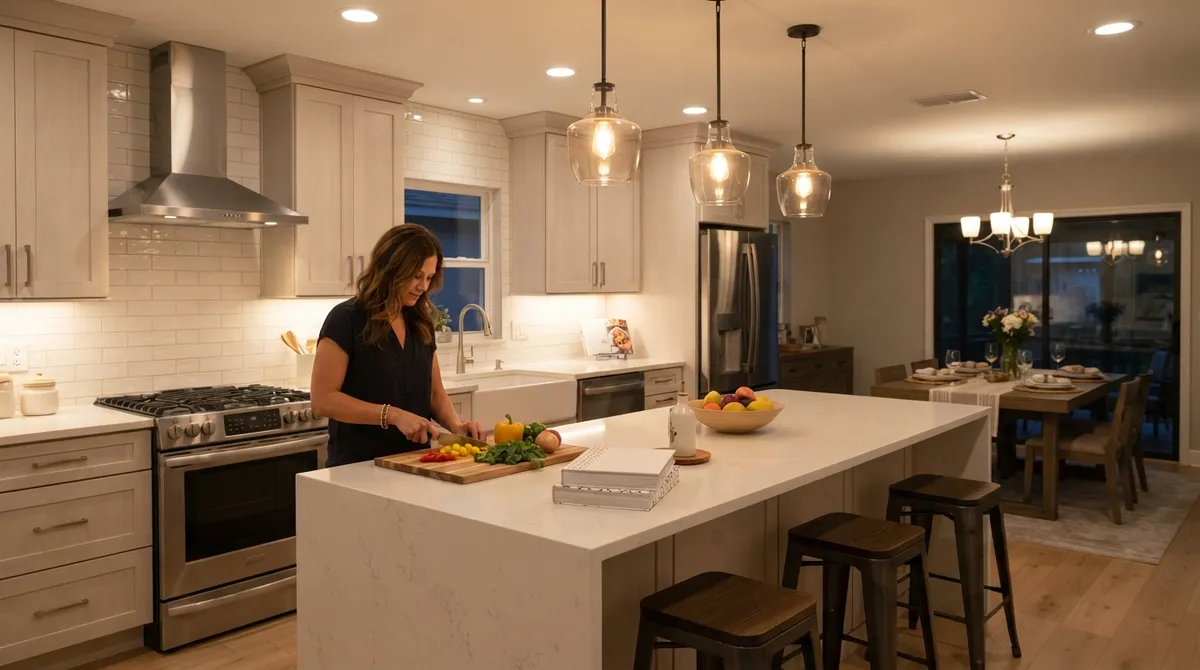
Layer your kitchen lighting with ambient (general), task (under-cabinet or island pendants), and accent lights so your kitchen has no harsh shadows and works for cooking, dining, and mood.
-
Add under-cabinet LED lighting during a remodel; it eliminates counter shadows from your body and is often the single most useful upgrade for daily cooking.
-
Keep color temperature consistent across all fixtures, typically 3000K to 4000K, since mixing warm and cool bulbs in one room can look messy.
-
Confirm permit requirements with Hillsborough County before starting, since new fixture locations, circuits, or wiring generally require an electrical permit in Riverview.
-
Budget for recessed LEDs at roughly $150 to $300 each in the Tampa area, and get an itemized estimate that lists fixtures, labor, and permit fees separately.
-
Choose IC-rated, air-tight recessed fixtures and confirm dimmers match your bulbs, since Florida energy code has requirements and mismatched controls can cause flickering.
Have you ever stood at your kitchen counter, chopping onions, only to realize your own shadow is blocking the cutting board? You are not alone. Poor lighting is one of the most common complaints we hear from homeowners, and it is also one of the most fixable. A well-planned kitchen lighting remodel in Riverview, FL can change how your kitchen looks, feels, and works every single day.
The good news is that lighting does not have to be a huge mystery. With a simple plan, the right fixtures, and a clear understanding of permits and costs, you can brighten your kitchen with confidence. Whether you are updating one room or planning a full renovation, lighting deserves a spot at the top of your list.
In this guide, we walk through layered lighting, fixture options, Hillsborough County permit basics, Florida energy-code points, and real cost ranges from the Tampa area. Let us get started.
Why Kitchen Lighting Deserves Your Attention
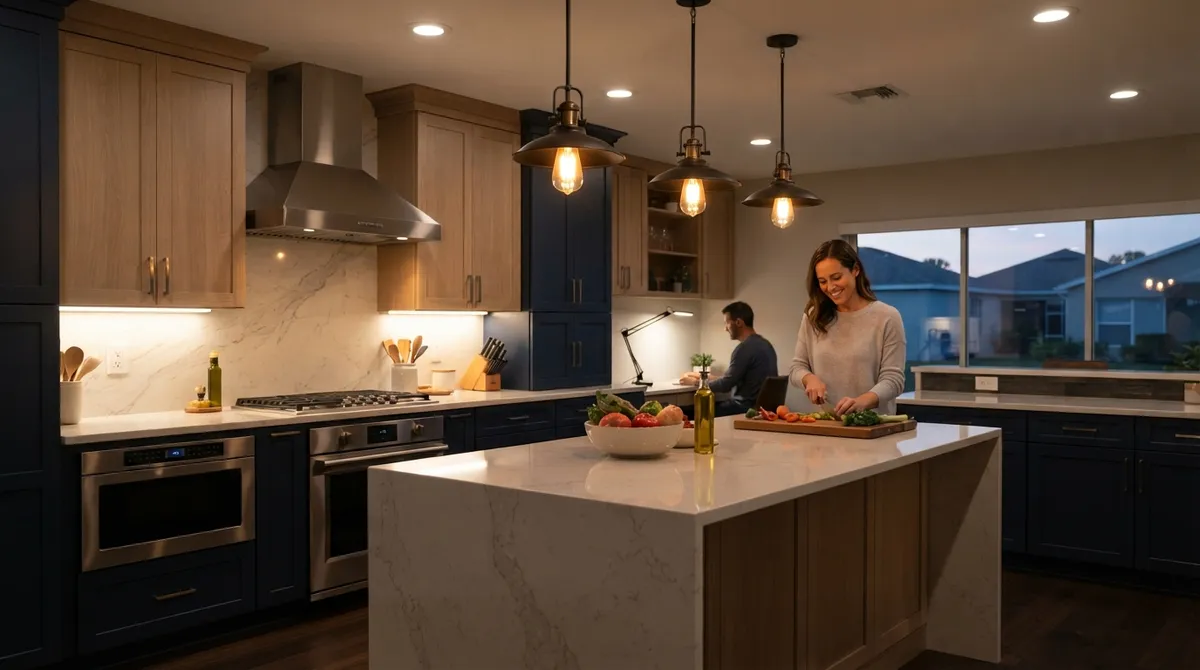
Your kitchen is the busiest room in the house. You cook there, do homework there, host friends there, and sometimes just stand there at midnight eating cereal. One ceiling light cannot handle all of that.
Good lighting does three big jobs at once:
- Helps you work safely. Bright, shadow-free counters make knife work and reading recipes easier.
- Sets the mood. Soft, dimmable light turns a busy workspace into a cozy gathering spot.
- Shows off your design. Beautiful cabinets, backsplash tile, and countertops look their best under the right light.
Many Riverview homes were built with a single center fixture or a few basic ceiling lights. That setup leaves dark corners and harsh shadows. A lighting remodel fixes these problems and often makes the whole space feel larger and fresher.
Understanding the Three Layers of Kitchen Lighting
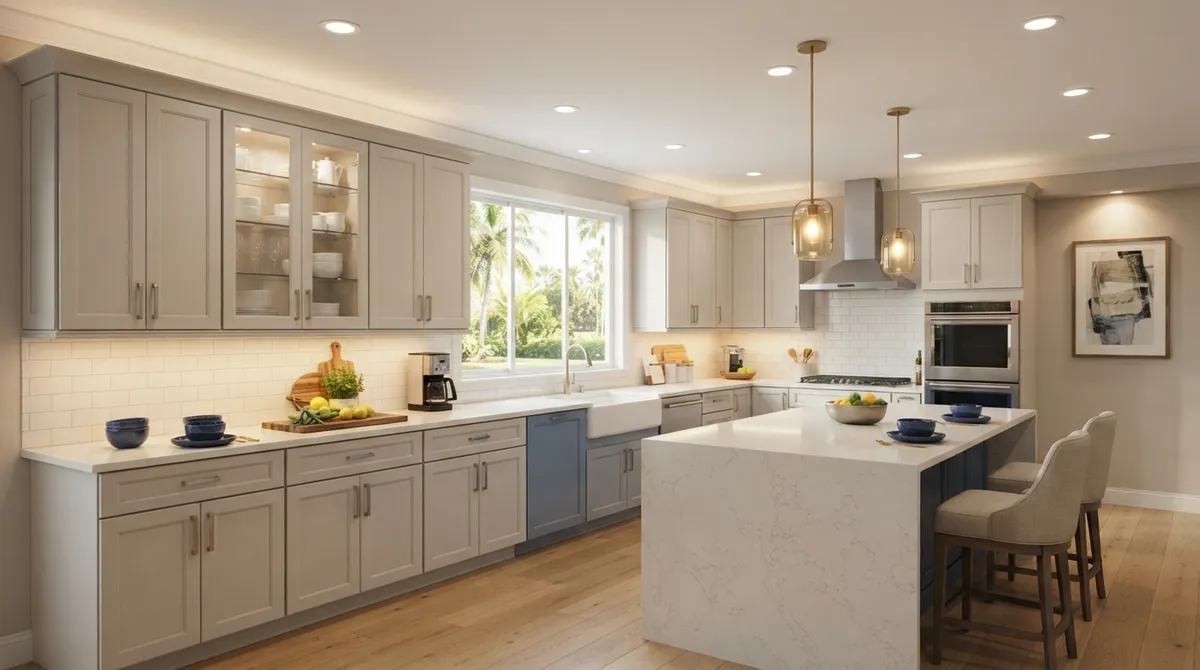
The secret to great kitchen lighting is layering. Instead of relying on one source, you combine three types. Each layer has its own job, and together they remove shadows and give you flexibility.
Ambient Lighting
Ambient lighting is the general glow that fills the room. Think of it as the base layer. Recessed LED lights, flush-mount fixtures, or a ceiling-mounted fixture usually handle this job. The goal is even light across the whole kitchen so you can walk in and see everything clearly.
Task Lighting
Task lighting shines right where you work. Under-cabinet LED strips or bars are the most popular choice. They light your countertops from above and in front, so your body does not block the light. Pendants over an island also count as task lighting when they are bright enough for prep work.
Accent Lighting
Accent lighting adds personality. It can highlight a tile backsplash, glass-front cabinets, open shelving, or a toe-kick area. It is not about brightness. It is about depth and style. A little accent lighting goes a long way toward making a kitchen feel designed rather than just lit.
| Lighting Layer | Main Purpose | Common Fixtures |
|---|---|---|
| Ambient | General room light | Recessed LEDs, flush mounts |
| Task | Bright light for work areas | Under-cabinet LEDs, island pendants |
| Accent | Style and depth | Cabinet strips, toe-kick lights, shelf lights |
Popular Fixture Options for a Riverview Kitchen
Once you understand the layers, it is time to pick fixtures. Here are the options we see homeowners choose most often.
Recessed LED Lights
Recessed lights sit flush in the ceiling and give a clean, modern look. They work well for general lighting in kitchens of almost any size. Placement matters, though. Lights placed too close to the cabinets can cast shadows on the counters, so spacing needs a plan. If you want to avoid common pitfalls, take a look at our guide on recessed lighting mistakes to avoid.
Pendants Over an Island or Peninsula
Pendants are the jewelry of the kitchen. They add style and bright, focused light over an island or peninsula. Two or three pendants spaced evenly usually look balanced. Choose a size that fits your island, and hang them at a comfortable height so they do not block sight lines.
Under-Cabinet Lighting
If you add only one thing during a kitchen lighting remodel, make it under-cabinet lighting. It wipes out counter shadows and makes every task easier. It also gives your kitchen a warm glow at night, which is lovely when you just need a soft light.
Dimmers and Smart Controls
Dimmers let you move from bright cooking mode to relaxed dinner mode with a quick slide. Smart switches add scenes and scheduling. Just make sure your bulbs and fixtures are compatible with the controls you pick, since mismatched parts can cause flickering or buzzing.
Choosing the Right Color Temperature
Color temperature is how warm or cool the light looks. It is measured in Kelvins, and it makes a big difference in how your kitchen feels.
- 2700K to 3000K: Warm white. Cozy and inviting, great with wood tones and warm paint colors.
- 3500K to 4000K: Neutral white. Crisp and clean, often a good fit for busy kitchens with white or gray finishes.
- 5000K and above: Cool daylight. Very bright and bluish, which some people find harsh indoors.
Most homeowners land between 3000K and 4000K. The most important tip is to keep the color temperature consistent across all fixtures. Mixing warm and cool bulbs in one room can look messy. If you are choosing finishes at the same time, our article on solid wood kitchen cabinets can help you think about how light and wood tones work together.
Permits and Code: What Riverview Homeowners Should Know
This is the part many people skip, and it is the part that can cause real headaches later. Electrical work in Florida has rules for a reason. Safe wiring protects your family and your home.
Who Handles Permits in Riverview?
Riverview is generally served by Hillsborough County permitting rather than the City of Tampa. That said, jurisdiction can depend on the exact property address, so always confirm the authority having jurisdiction before work begins. A quick check with Hillsborough County Development Services can save you a lot of trouble.
When Is a Permit Needed?
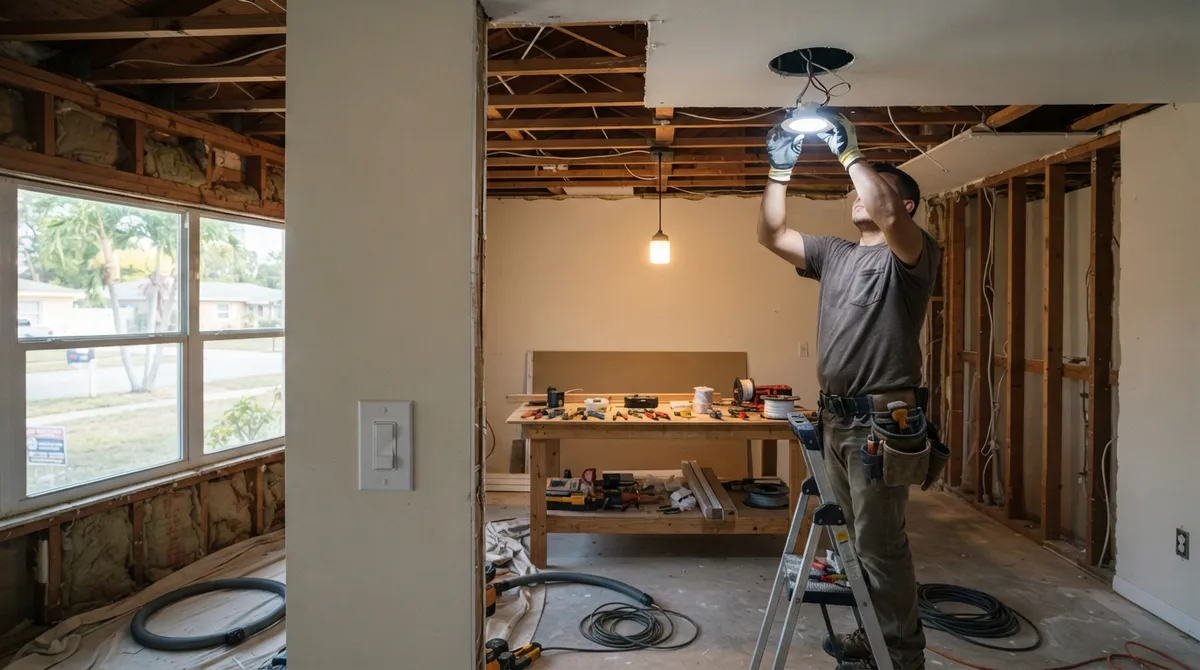
As a general rule, new or added electrical work requires an electrical permit. A simple like-for-like swap of a fixture on existing wiring may be treated differently. But if you are adding new fixture locations, new circuits, or new wiring, you should check with the county and a licensed electrical contractor first. When in doubt, ask before you cut into a ceiling.
Code Editions and Energy Rules
Research indicates that Florida jurisdictions reference the Florida Building Code, 8th Edition (2023), and the 2020 National Electrical Code. Please verify the currently enforced editions with Hillsborough County before you plan your project, since requirements can change.
Florida energy-code provisions also matter for lighting. According to the Florida Energy Conservation Code (2023 edition), these points may apply:
- Recessed luminaires installed in the building thermal envelope must be IC-rated and air-tight, with a maximum air-leakage rate of 2.0 cfm, and sealed to the ceiling surface.
- Many permanently installed luminaires must meet a minimum efficacy of 45 lumens per watt, or use lamps with at least 65 lumens per watt, subject to stated exceptions.
These details are one reason LED fixtures are so common in Florida remodels. Always confirm how the rules apply to your specific project.
The Risk of Hiring Unlicensed Help
Lighting projects can look simple. A handyman might offer to swap a few fixtures for a low price. But electrical work done without a permit or proper licensing can cause serious problems, including failed inspections, trouble with insurance, and trouble when you sell your home.
That is why we always recommend working with licensed professionals. At iCorry Construction (Florida License CRC1334854), we coordinate electrical work through qualified trades and help manage the permit process. If you ever find yourself with unpermitted work or a code issue, our permit and code resolution services can help you sort it out. We cannot guarantee permit approval, but we can help you understand the path forward.
What Does a Kitchen Lighting Remodel Cost?
Cost is the question everyone asks. The honest answer is that it depends on your home. Fixture count, ceiling access, existing wiring, and whether new circuits are needed all change the final number.
To give you a general feel, here are indicative ranges reported by Tampa-area electrical contractors. These are not Riverview quotes and are not guarantees, but they help you plan.
| Lighting Item | Reported Tampa-Area Range | Source Notes |
|---|---|---|
| Recessed LED (per light) | About $150 to $300 | Lightning Bay Electric, local pricing page |
| Six-light recessed kitchen | About $1,000 to $1,800 | Lightning Bay Electric, varies with access and wiring |
| Pendant with relocated box (each) | About $200 to $400 | Lightning Bay Electric, fixture cost may vary |
| Under-cabinet lighting | About $200 to $600 or $500 to $1,200 | Mr. Electric of Tampa Bay and Lightning Bay Electric |
Notice the wide gap in under-cabinet pricing. That gap shows how much scope, cabinet length, fixture type, and wiring matter. Permit fees are separate, so ask for an itemized estimate that lists them clearly.
We do not quote prices in articles because every home is different. The best way to know your real cost is to have someone look at your kitchen.
A Simple Step-by-Step Plan for Your Lighting Remodel
Here is an easy path to follow from idea to finished kitchen.
- Walk through your kitchen. Note dark spots, shadowy counters, and areas where you struggle to see.
- Decide what you want each layer to do. Pick your ambient, task, and accent goals.
- Choose fixtures and color temperature. Keep the color consistent across the room.
- Check your ceiling and wiring. Attic access and existing circuits affect the plan and the price.
- Confirm permits. Verify requirements with Hillsborough County and a licensed electrical contractor.
- Get an itemized written estimate. Make sure it includes fixtures, labor, and permit costs.
- Schedule the work around your kitchen. Plan for a few days without full use of the space.
- Do a final walkthrough. Test every switch and dimmer, and review warranty details.
Questions to Ask Before You Hire
A little homework up front protects you later. Before you sign anything, ask these questions:
- Are you licensed, and can I see your license number?
- Who will pull the permit, and what will it cost?
- Will the estimate list fixtures, labor, and any wiring or circuit changes?
- What happens if you find hidden problems in the ceiling or walls?
- Are the fixtures IC-rated and air-tight where required?
- What warranties come with the products and the workmanship?
If you want more help vetting a contractor, our guide on how to hire a home remodeling contractor covers what to look for and what to avoid.
Lighting as Part of a Bigger Kitchen Remodel
Lighting works best when it is planned alongside everything else. If you are replacing cabinets, moving a wall, or changing your layout, that is the perfect time to rough in new wiring while walls and ceilings are open. It is usually easier and often more affordable than adding lighting after the fact.
Our kitchen and bathroom remodeling services include lighting as part of the full picture, along with cabinetry, countertops, backsplashes, flooring, and more. We coordinate plumbing and electrical through qualified trades so the whole project stays organized. If you are thinking about wood finishes too, you may enjoy reading what to know before an all-wood kitchen remodel.
Planning a bathroom next? Good lighting matters there too. Check out these lighting ideas for a small bathroom, or read about planning a bathroom remodel in Riverview.
Working With iCorry Construction in Riverview
When you work with us, you work directly with Stephen Corry, the owner and license holder. Stephen has more than 20 years of construction experience and manages every project. There is no handoff to a stranger, and you always know who to call. Homeowners across Riverview and the surrounding Tampa Bay area trust us for clear communication and straightforward expectations.
Curious what our neighbors think? You can visit us on Google and read iCorry Construction reviews, or follow iCorry Construction on Facebook to see our latest projects.
For more general guidance on safe home electrical work, the U.S. Consumer Product Safety Commission electrical safety page offers helpful tips. You can also learn about efficient lighting choices through the U.S. Department of Energy guide to LED lighting.
Ready to Brighten Your Kitchen?
A great kitchen lighting remodel in Riverview, FL starts with a smart plan: layered light, the right fixtures, a consistent color temperature, and a licensed team that handles permits properly. Take it one step at a time, and your kitchen will go from dim and shadowy to bright and welcoming.
We would love to help you get there. Contact us to request your free quote, or call us at (727) 637-7785. We respond to quote requests within 24 hours, and Stephen is ready to talk through your goals, your budget, and your timing.
FAQs
Q: Do I need a permit to add recessed kitchen lights in Riverview, FL?
A: In most cases, adding new fixture locations, circuits, or wiring calls for an electrical permit. A simple swap on existing wiring may be treated differently. Check with Hillsborough County Development Services and a licensed electrical contractor before you start so you stay safe and on the right side of the rules.
Q: How much does it cost to install recessed LED lights in a Tampa Bay kitchen?
A: One Tampa-area electrical contractor reports about $150 to $300 per recessed light, with a six-light kitchen often landing around $1,000 to $1,800. Your real cost depends on ceiling access, existing wiring, and whether new circuits are needed. Ask for an itemized written estimate and confirm permit costs separately.
Q: What type of lighting works best over a kitchen island?
A: Pendants are a favorite because they add style and bright, focused light right where you prep and gather. Two or three evenly spaced pendants usually look balanced, and a dimmer lets you adjust the mood. Just pick a size that fits your island and hang them so they do not block your view.
Q: Are under-cabinet LED lights worth adding during a kitchen remodel?
A: Yes, they are one of the most helpful upgrades you can make. They remove counter shadows, make cooking tasks easier, and give your kitchen a soft glow at night. Adding them during a remodel is often simpler because walls and cabinets are already open.
Q: What color temperature should I choose for kitchen lighting?
A: Most homeowners choose between 3000K and 4000K. Warm white around 3000K feels cozy, while neutral white near 4000K feels crisp and clean. The key tip is to keep every bulb the same color temperature so the room looks even and polished.
Our Service Area