Key Takeaways
-
Skipping the permit check can cause major trouble: adding fixtures or circuits may require a permit through Hillsborough County Development Services, and unpermitted work can surface during a sale or inspection.
-
Use only IC-rated, airtight recessed fixtures with a ceiling seal, since Florida's 2023 energy code requires both to keep conditioned air from leaking into a hot attic.
-
Keep combustible attic insulation at least 3 inches from recessed fixtures unless the fixture listing specifies a different clearance, and follow the manufacturer's installation instructions.
-
Before cutting any holes, have a licensed electrician check joists, available wire routing, attic access, and panel capacity, since these factors drive most of the cost differences between quotes.
-
Plan the layout around how each room is used, avoid overcrowding the ceiling to prevent glare, and confirm that fixtures and dimmers are compatible to avoid flicker or buzzing.
-
Ask for an itemized, project-specific quote covering attic access, new circuits, fixture type, dimmer choice, and drywall patching, since published per-light estimates vary widely by home.
Recessed lighting can make a room feel bigger, brighter, and more modern. It can also turn into a headache fast if the job is planned poorly. We have seen homeowners cut too many holes, pick the wrong fixtures, or skip steps that cause trouble later. Nobody wants to look up at a ceiling full of regrets.
If you are thinking about recessed lighting installation in Apollo Beach, you are in the right place. Good lighting is not just about drilling holes and dropping in cans. It depends on your wiring, your ceiling, your attic, and the rules in Hillsborough County.
At iCorry Construction (Florida License CRC1334854), we work with homeowners on remodels of every size. Lighting is often a big part of the plan. Below are seven common mistakes that can waste money, hurt comfort, or create code problems. Let’s help you steer clear of them.

Why Recessed Lighting Is Worth Planning Carefully
Recessed lights sit inside the ceiling instead of hanging from it. That gives you a clean, simple look. They work well in kitchens, living rooms, hallways, and bathrooms.
But adding them is more than a cosmetic upgrade. New fixtures can mean new wiring, new switches, and sometimes a new circuit. Your ceiling type and attic access matter too. That is why a little planning up front saves a lot of stress later.
Here are a few reasons homeowners choose recessed lighting during a remodel:
- It frees up ceiling and wall space for a cleaner look.
- It spreads light evenly across a room.
- It works well with dimmers to set the mood.
- LED fixtures use less energy than many older lamp types.
- It can highlight cabinets, art, or a favorite feature wall.
Mistake 1: Skipping the Permit Check
This one comes first because it can cause the biggest trouble. Apollo Beach is in Hillsborough County, so electrical work is generally handled through Hillsborough County Development Services. Adding fixtures or circuits may require a permit.
Some homeowners assume a few lights are no big deal. Then a home sale, an inspection, or an insurance question brings the unpermitted work to light. That can mean delays and extra cost.
Before any work starts, confirm the rules for your address. We cannot promise permit approval, but we can help you understand what is needed. If you already have unpermitted work or a code issue, our permit and code resolution help is there for that exact situation.
Mistake 2: Hiring an Unlicensed Handyman
It is tempting to save a few dollars by hiring someone with a ladder and a drill. Please do not. Electrical work touches your home’s safety, and mistakes can lead to shorts, overheating, or fire risk.
A licensed professional also knows the code details that matter. Plumbing and electrical work on our projects is handled by qualified licensed trades that we coordinate. That way the work is done right and fits into the bigger remodel schedule.
If you are choosing who to trust, our guide on how to hire a home remodeling contractor in Apollo Beach walks through what to look for. License status is always the first thing to check.
Mistake 3: Not Checking Wiring and Panel Capacity
Cutting a hole in the ceiling is the easy part. The real question is what is behind it. Are there joists in the way? Is there room for new wire? Can your panel handle another load?
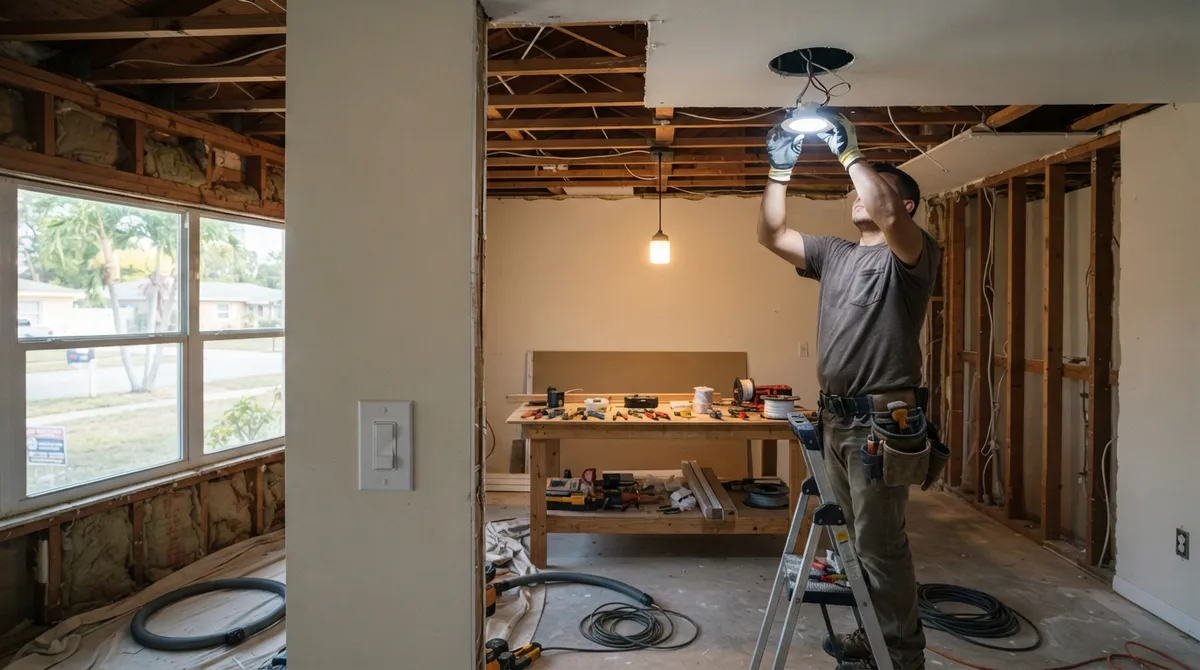
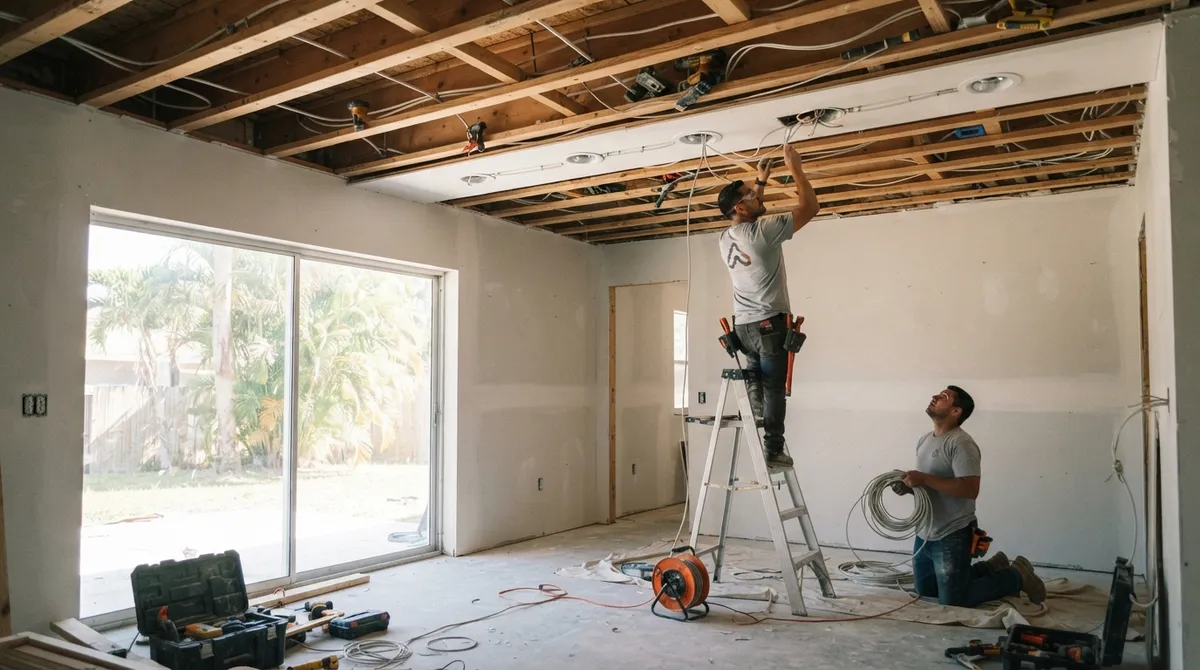
Adding recessed fixtures can involve new wiring, switching, or even a new circuit. A licensed electrical contractor should look at your existing wiring, panel capacity, ceiling construction, and attic access before anyone cuts anything.
This is also why quotes vary so much. One ceiling with easy attic access is a simple job. Another with a finished room above it is a very different story.
Mistake 4: Using the Wrong Fixtures for a Florida Home
Not every recessed light is built for the same job. Florida has specific energy code rules, and the 2023 Florida Energy Conservation Code covers recessed lights in your home’s thermal envelope. That is the part of your home that separates conditioned space from the attic.
Here is what the code generally calls for:
- Recessed luminaires must be IC-rated.
- They must be labeled for air leakage of no more than 2.0 cfm at 1.57 psf (75 Pa).
- They must be sealed with a gasket or caulk at the ceiling finish.
IC-rated means the fixture is made to be in contact with insulation. Airtight means it will not leak your cool, conditioned air into a hot attic. In Florida, that matters a lot for comfort and your power bill.
The same code update also sets an efficacy rule. Most permanently installed residential luminaires must provide at least 45 lumens per watt, or use lamps rated at least 65 lumens per watt. Kitchen appliance lighting is excluded. LED fixtures usually meet this with ease.
Mistake 5: Ignoring Insulation Clearance
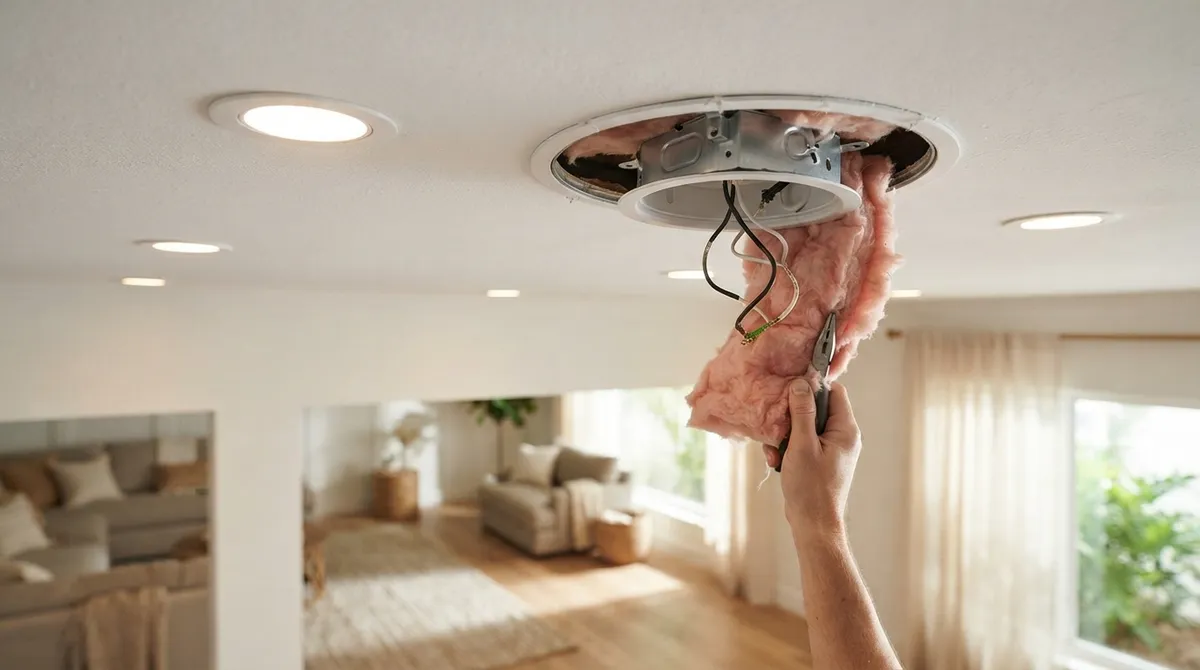
Attic insulation and hot fixtures need some space between them. The 2023 Florida Residential Code generally requires combustible insulation to be kept at least 3 inches from recessed luminaires. The exception is when the fixture is listed for a different clearance.
The safest path is to follow the fixture’s listing and installation instructions every time. Those papers are not just fine print. They are your guide to safe, code-friendly installation.
If you have a ceiling that already has thick blown-in insulation, plan for this early. Moving insulation back or choosing the right fixture type should be part of the job, not an afterthought.
Mistake 6: Putting Too Many Lights in the Wrong Places
More lights does not always mean better light. A ceiling that looks like Swiss cheese can feel harsh and cause glare. Poor spacing can also leave dark corners or hot spots on the floor.
Think about how you use each room first. Then plan the layout around tasks, furniture, and focal points. Here is a simple way to approach it:
- List what happens in the room, such as cooking, reading, or entertaining.
- Mark where counters, seating, and key furniture will sit.
- Decide where you need task light and where you want softer light.
- Pick a fixture size, beam spread, and color temperature that fit the mood.
- Choose dimmers that are compatible with your fixtures.
- Review the layout with your contractor before any holes are cut.
Fixture and dimmer compatibility is a big one. A mismatched dimmer can cause flicker or buzzing. Always confirm the two work together before you buy.
If you are updating a kitchen or bath, lighting should be planned alongside cabinets, counters, and tile. Our kitchen and bathroom remodeling work includes lighting as part of the full picture. For smaller spaces, our post on 12 best lighting ideas for a small bathroom has helpful layout ideas.
Mistake 7: Budgeting Without Knowing What Drives Cost
Price is the question we hear most. The honest answer is that it depends. One local Tampa-area electrical contractor advertises an estimate of $150 to $300 per added recessed LED light, including fixture, wiring, and a shared dimmer. The same contractor lists $1,000 to $1,800 for a six-light kitchen installation.
Please treat those as one contractor’s published estimates, not a market-wide survey. Your real quote will depend on your home. We do not quote prices without seeing the project, because the details change everything.
These are the usual factors that move the number:
- How easy it is to reach the attic or the space above the ceiling
- Whether you need a new circuit or just a tie-in to existing wiring
- The type of fixture, trim, and dimming system you choose
- The ceiling material and any drywall repair afterward
- The number of lights and switches
- Whether permits and inspections are needed
Here is a quick table to help you see how project details can affect your planning:
| Project Detail | Why It Matters | What to Ask |
|---|---|---|
| Attic access | Easy access usually means simpler wiring runs | Can the crew reach above the ceiling? |
| New circuit needed | Adds labor and materials | Is there panel space for another circuit? |
| Fixture type | Affects cost, look, and code fit | Is it IC-rated and airtight? |
| Dimmer choice | Must match the fixture | Is it rated for these LEDs? |
| Ceiling repair | Drywall and paint add to the job | Who handles patching and painting? |
How We Approach Recessed Lighting as Part of a Remodel
Lighting works best when it is planned with the rest of the project. When you work with iCorry Construction, you work directly with Stephen Corry, the owner and license holder. He has more than 20 years of construction experience and manages each project himself.
We do not offer in-house design or architectural services. If your project needs plans, design documents, or engineering, Stephen can explain what is required. Electrical work is done by qualified licensed trades that we coordinate, so you get one point of contact instead of juggling several.
Our process is simple:
- We talk about your goals, budget, and timing.
- We define the work, including materials, permits, and any needed engineering.
- Stephen coordinates the trades and scheduling and keeps you informed.
- We walk through the finished project with you and review warranty details.
If we open a ceiling and find hidden damage or old work that needs fixing, Stephen explains what he found, what he recommends, and how it affects cost or timing before more work moves forward. No surprises.
Recessed Lighting and Other Remodeling Projects
Recessed lights rarely happen alone. They often come with a bigger update. Here are a few places we see them added:
- Kitchen remodels, where lighting ties into new cabinets and counters
- Garage conversions that become bedrooms, offices, or guest suites
- Room additions and ADUs that need a full lighting plan from the start
- Whole-home renovations that open up walls and make wiring easier
If you are weighing a larger project, take a look at our home additions, ADUs, and garage conversions page. For broader updates, see our home remodeling and renovations services.
Planning outdoor spaces too? Our ideas for outdoor patio lighting in Apollo Beach can help you carry the look outside.
Storm Damage and Lighting Repairs
Apollo Beach homeowners know Florida weather can be rough. After a storm or water intrusion, ceilings can sag, stain, or need to be opened up. That is sometimes when recessed lights need to be replaced or relocated.
If your ceiling has water damage, repair the cause first. Our storm, flood, and structural repairs cover framing, drywall, and other reconstruction work. Fixtures that got wet should always be checked by a licensed electrician before they are used again.
We focus on repairs and reconstruction. We do not offer water extraction, drying, or mold remediation. For insurance-related repairs, we can document visible damage and prepare a repair quote, but coverage decisions stay between you and your insurance company.
A Quick Pre-Install Checklist
Before you say yes to any recessed lighting quote, run through this short list:
- Is the contractor licensed, and is the electrical work done by a licensed trade?
- Has the permit question been answered for your address?
- Are the fixtures IC-rated and airtight with a ceiling seal?
- Will insulation clearance follow the fixture’s listing?
- Do the fixtures and dimmers match?
- Is ceiling patching and painting included in the scope?
If you can check every box, you are in great shape. If not, that is a good time to pause and ask more questions.
Ready to Brighten Your Home the Right Way?
Recessed lighting can completely change how your home looks and feels. The key is avoiding these seven mistakes: skipping permits, hiring unlicensed help, ignoring wiring limits, choosing the wrong fixtures, forgetting insulation clearance, overdoing the layout, and budgeting blind.
You are not alone in figuring this out. We are a licensed residential contractor in Apollo Beach, and we are happy to talk through your plans. You can contact us to request a free quote, or call (727) 637-7785. We respond to quote requests within 24 hours.
Want to see what our neighbors say? Visit us on Google — iCorry Construction to read reviews. You can also follow iCorry Construction on Facebook for project updates. Learn more about iCorry Construction and Stephen’s background too.
Let’s make your ceiling something you love to look at, and light your home beautifully for years to come.
FAQs
Q: How much does recessed lighting installation cost in Apollo Beach, Florida?
A: One Tampa-area electrical contractor advertises $150 to $300 per added recessed LED light and $1,000 to $1,800 for a six-light kitchen. Your actual cost depends on attic access, wiring, fixture choice, and whether you need a new circuit. A project-specific quote is the only way to know for sure.
Q: Do I need an electrical permit to add recessed lights in Hillsborough County?
A: Often, yes. Adding fixtures or circuits can require a permit through Hillsborough County Development Services. Check the rules for your address before work begins, and let a licensed professional pull the permit if one is needed.
Q: What does IC-rated and airtight mean for recessed lighting?
A: IC-rated means the fixture is built to sit in direct contact with insulation. Airtight means it limits air leakage to no more than 2.0 cfm at the tested pressure, which helps keep cool air from escaping into a hot Florida attic. The 2023 Florida Energy Conservation Code requires both for lights in the thermal envelope.
Q: Can recessed lights be installed in a ceiling with attic insulation?
A: Yes, as long as the right fixtures are used and clearance rules are followed. Combustible insulation is generally kept at least 3 inches from recessed fixtures unless the listing allows a different distance. Always follow the fixture’s installation instructions.
Q: Should I hire a licensed electrician to install recessed lighting?
A: Absolutely. Electrical work affects your home’s safety, and a licensed pro knows the code, permit, and wiring details. When we handle a remodel, the electrical work is done by qualified licensed trades that we coordinate for you.
Our Service Area