Key Takeaways
-
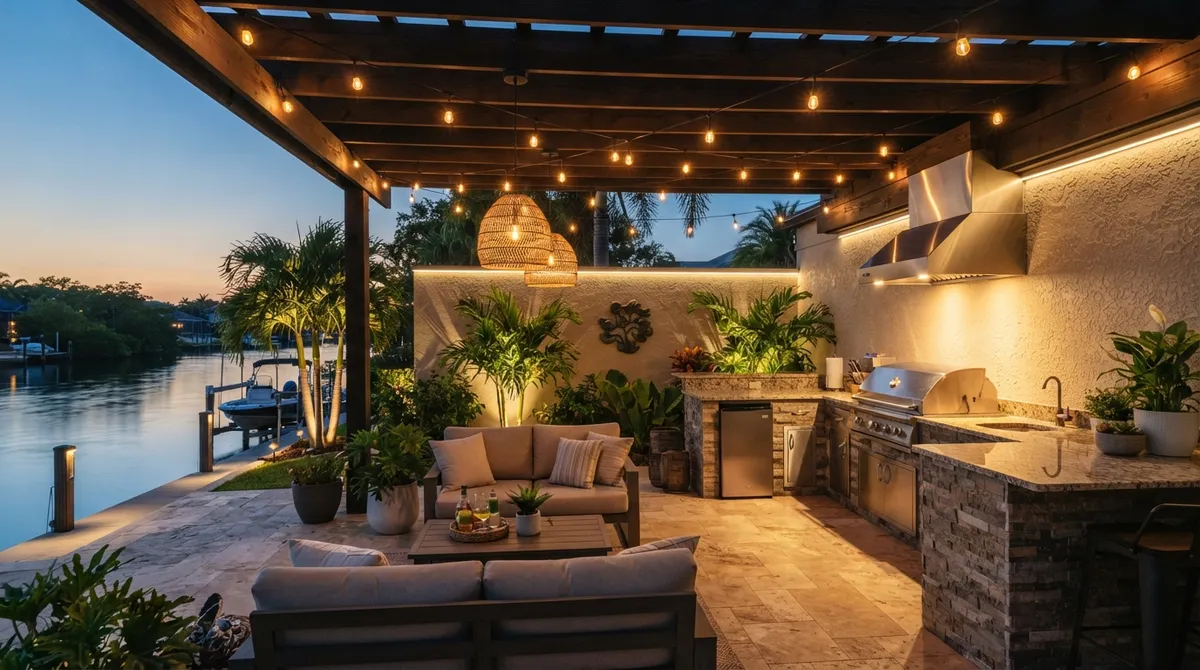
Layer your patio lighting into three types: ambient for general visibility, task lights over grills and counters, and accent lights on plants or walls, each on its own switch or dimmer.
-
Match fixture ratings to the exact location: fixtures exposed to rain need a wet-location rating, and near pools or waterfronts choose wet-rated, corrosion-resistant models to resist salt air.
-
Check Hillsborough County permit requirements before starting; the low-voltage exemption is limited to $5,000 in labor and materials and does not cover line-voltage wiring or new circuits.
-
Use timers, photocells, and dimmers to control lighting, and verify any energy-savings claims on LED products with a project-specific estimate rather than relying on packaging.
Picture this: it is a warm Apollo Beach evening, the breeze is soft, and your patio glows just right. Not too bright. Not too dark. That is what good outdoor patio lighting in Apollo Beach can do for your home. It turns a basic slab into a place where your family actually wants to hang out after sunset.
But lighting a patio on the Gulf Coast is not the same as lighting one in a dry, inland town. Sun, heavy rain, humidity, and salt air all take a toll. Add permit rules in Hillsborough County and a few electrical safety details, and the project can feel like a lot.
Good news. We have pulled together eight practical ideas to help you plan with confidence. At iCorry Construction (Florida License CRC1334854), we help homeowners remodel outdoor living areas, and we know what holds up in our climate. Let us walk through it together.
1. Start With a Layered Lighting Plan
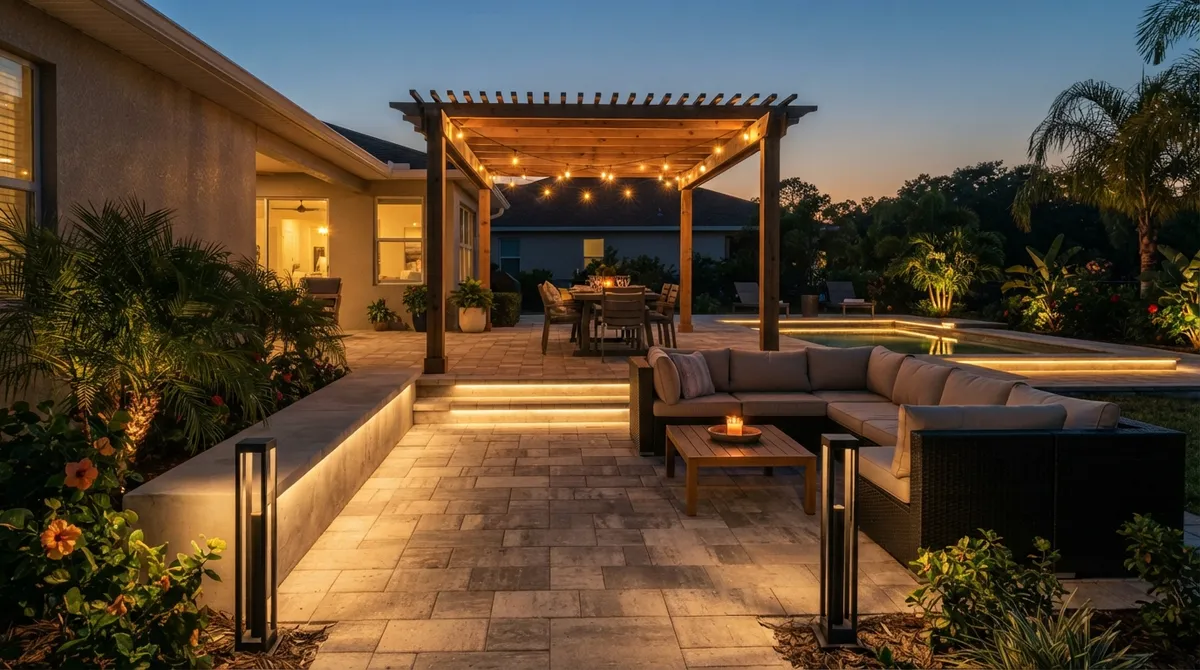
The best patios do not rely on one bright light. They use layers. Think of it like dressing for a cool morning: a few light pieces work better than one heavy coat.
The Three Layers
- Ambient light: soft, general light so you can see and move around safely.
- Task light: brighter light where you cook, serve, or play cards.
- Accent light: gentle glow on plants, walls, columns, or other features you love.
When you plan all three, your patio feels useful and cozy at the same time. Many homeowners skip task lighting, then end up grilling with a phone flashlight. Let us avoid that.
2. Choose Wet-Rated Fixtures Where Rain Can Reach
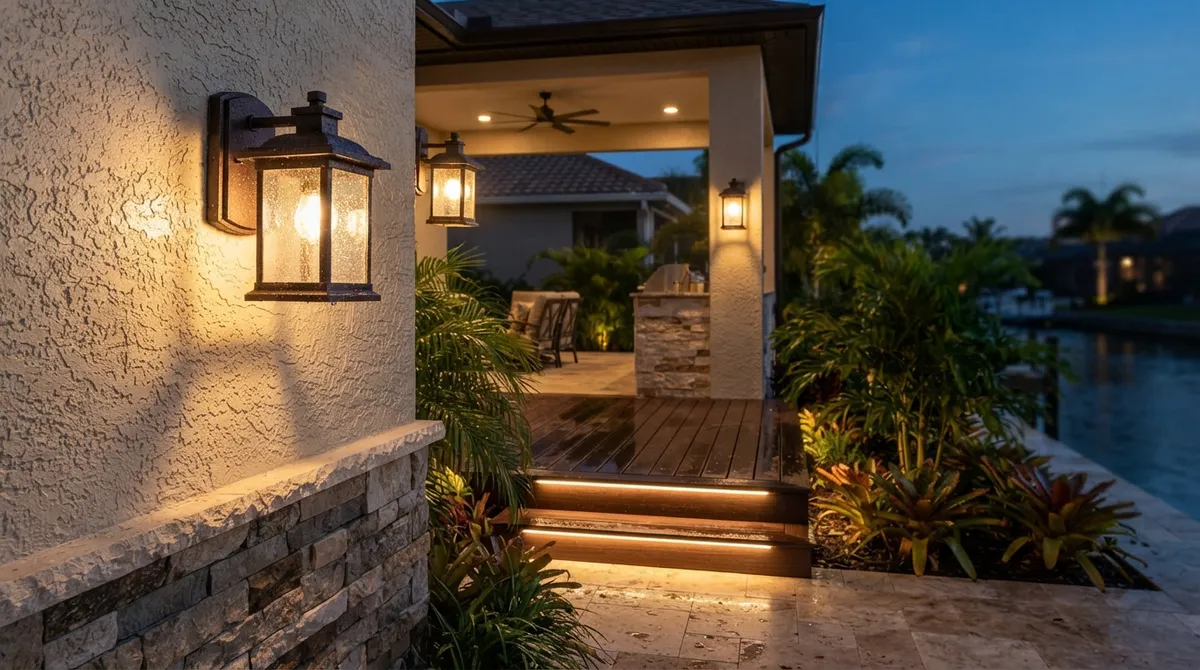
Here is a detail that trips up a lot of people. Outdoor fixtures are not all built the same. Fixtures that can get rained on generally need a wet-location rating. A covered lanai may allow different options, but the rating should always match the real spot where the fixture will hang.
Always follow the manufacturer’s instructions and applicable electrical code. If you are unsure, ask before you buy. A fixture that is not rated for rain can fail early or become a safety problem.
| Patio Location | Exposure | What to Look For |
|---|---|---|
| Open patio with no roof | Direct rain and sun | Wet-rated, corrosion-resistant fixtures |
| Partly covered patio | Wind-blown rain possible | Wet-rated fixtures for edges and exposed spots |
| Covered lanai or porch | Humidity, some moisture | Fixtures rated for the actual location, per manufacturer |
| Near pool or waterfront | Splash, humidity, salt air | Wet-rated, corrosion-resistant, installed per code |
3. Pick LEDs for Comfort and Efficiency
LED fixtures are a smart fit for Florida patios. They generally use less electricity than many older lamp types, and they come in lots of brightness levels and colors. That means you can fine-tune the mood.
Look at Color, Not Just Watts
Wattage alone does not tell you how bright a light feels. Check the lumens for brightness and the color temperature for warmth. A warm white tone usually feels relaxed and inviting for dining and lounging. A cooler white can work better near a grill or work area.
- Warm tones suit seating and dining areas.
- Brighter output suits cooking and prep zones.
- Dimmable options let one patio serve many moods.
We could not find reliable Apollo Beach cost or energy-savings numbers, so be careful with big promises on product boxes. Ask for a project-specific estimate and verify any energy claims.
4. Plan for Coastal Weather and Salt Air
Apollo Beach sits right by the water. That is why we love living here, and it is also why outdoor gear wears out faster. Sun, heavy rain, humidity, and salt can chew through cheap finishes.
Choose outdoor-rated, corrosion-resistant fixtures. Then take care of them the way the manufacturer recommends. A quick wipe-down now and then can add years of life.
- Choose fixtures made for outdoor and coastal conditions.
- Check that finishes are corrosion-resistant.
- Ask about warranty coverage for outdoor use.
- Rinse and clean fixtures as the manufacturer advises.
- Inspect seals and mounting points after big storms.
Speaking of storms, if heavy weather has already done a number on your outdoor spaces, take a look at our guide on what a pre-hurricane season home inspection should include.
5. Coordinate Lights With the Whole Patio Design
Lighting works best when it is planned with the rest of the space, not tacked on at the end. Think about the roof or lanai structure, doors, seating, outdoor kitchen, landscaping, and any pool or waterfront view.
Quick Placement Ideas
- Put task lighting right over the grill or outdoor kitchen counter.
- Use soft ceiling or wall lights over seating areas.
- Light pathways and steps for safe footing.
- Highlight a favorite tree, wall, or architectural detail.
- Keep glare out of eyes at seating height.
Planning this early saves money. Once a ceiling or wall is finished, adding wiring gets harder. If you are building or expanding an outdoor living area, our home remodeling and renovations work can help you think through the layout first.
6. Add Controls: Dimmers, Timers, and Photocells
Controls are the secret sauce. They make lighting easier to live with and help you avoid leaving lights on all night.
| Control Type | What It Does | Best Use |
|---|---|---|
| Dimmer | Adjusts brightness | Dining and lounging areas |
| Timer | Turns lights on and off on a schedule | Pathways and entry areas |
| Photocell | Turns lights on at dusk, off at dawn | Security and accent lighting |
| Multiple switches | Separates zones | Layered ambient, task, and accent plans |
Zoning your lights on separate switches lets you run just the layer you need. Movie night? Keep it low and warm. Cookout? Turn up the task lights.
7. Know the Permit Rules Before You Start
This is the part many homeowners skip, and it can cause headaches later. Apollo Beach is in Hillsborough County. The county states that most construction requires approval and permits, and applications go through its HillsGovHub system.
Whether your patio lighting needs a permit depends on the scope. Swapping a fixture is different from running new wiring or adding a new circuit. Hillsborough County lists a limited exemption for certain low-voltage work at an existing single-family home, with conditions that include a $5,000 labor-and-materials limit. Do not assume that exemption covers line-voltage wiring, new circuits, or other work.
Here is a simple way to handle it:
- Write down exactly what you want to add or move.
- Decide if it is a fixture swap, low-voltage lighting, or new wiring.
- Confirm the requirements with Hillsborough County Development Services before work begins.
- Check any HOA or community rules on light spill and fixture style.
- Hire licensed professionals for the work that requires them.
This is also where hiring matters. Unlicensed handymen may offer a cheap quote, but unpermitted electrical work can lead to code problems, insurance trouble, and costly fixes down the road. If you already have unpermitted work or an open code issue, our permit and code resolution service can help you understand your next steps. We cannot guarantee any permit outcome, but we can explain what is needed.
8. Hire the Right Team for the Job
Patio lighting looks simple, but it touches structure, electrical, and often the rest of an outdoor remodel. The right team keeps all those pieces working together.
At iCorry Construction, you work directly with Stephen Corry, the owner and license holder, who has more than 20 years of construction experience. Electrical work is handled by qualified trades that we coordinate, so you get proper work without chasing down multiple contractors yourself. We also help keep permits, scheduling, and communication on track.
If you are weighing options, our article on how to hire a home remodeling contractor in Apollo Beach is a helpful read. You can also see what neighbors say by checking iCorry Construction reviews on Google, or follow iCorry Construction on Facebook to see recent projects.
Questions to Ask Any Contractor
- Are you licensed, and can I see the license number?
- Who handles the electrical work, and are they qualified?
- Will the project need a permit, and who manages it?
- What warranties come with the products and the workmanship?
- How will you communicate with me during the project?
Common Mistakes to Avoid
A few small missteps can cause big frustration. Here are the ones we see most often with patio lighting.
- Buying fixtures that are not rated for the location.
- Using one bright light instead of a layered plan.
- Ignoring salt air and choosing fixtures that corrode fast.
- Skipping the permit conversation.
- Pointing lights so they glare into neighbors’ windows or your own eyes.
Take your time with the plan. A little thought up front means a patio you will enjoy for years. If your outdoor project grows into a bigger renovation, we also handle home additions, ADUs, and garage conversions, which often include new lighting needs of their own.
Ready to Light Up Your Patio?
Great outdoor patio lighting in Apollo Beach comes down to a few simple things: a layered plan, the right ratings for wet and coastal conditions, smart controls, and a clear understanding of permits. Get those right, and your patio becomes the favorite room in the house.
We would love to help you plan it. Request a free quote through our contact page or call us at (727) 637-7785. We respond to quote requests within 24 hours, and Stephen will be glad to talk through your goals. iCorry Construction, Florida License CRC1334854.
FAQs
Q: Do I need a permit to install outdoor patio lighting in Apollo Beach?
A: It depends on the scope. Apollo Beach is in Hillsborough County, which says most construction needs approval and permits, and it lists only a limited exemption for certain low-voltage work with conditions. Check with Hillsborough County Development Services before you start, especially if you are adding new wiring or circuits.
Q: Should patio lights be wet-rated or damp-rated?
A: Match the rating to where the light will actually hang. Fixtures that rain can reach generally need a wet-location rating, while covered spots may have different needs. Always follow the manufacturer’s instructions and applicable electrical code.
Q: Are LED patio lights a good choice for Florida’s climate?
A: Yes, LEDs are a practical pick for outdoor remodeling. They generally use less electricity than many older lamp types and come in many brightness and color options. Just make sure the fixture is outdoor-rated and corrosion-resistant for our humid, salty air.
Q: How can I protect outdoor lights from salt air near Apollo Beach?
A: Start with outdoor-rated, corrosion-resistant fixtures and finishes. Then clean and inspect them as the manufacturer recommends, especially after big storms. A little regular care can help your lights last much longer.
Q: How do I plan ambient, task, and accent lighting for a patio?
A: Use ambient light for general visibility, task light where you cook or dine, and accent light to show off plants, walls, or architectural details. Putting each layer on its own switch or dimmer lets you set the mood for any occasion.
Our Service Area